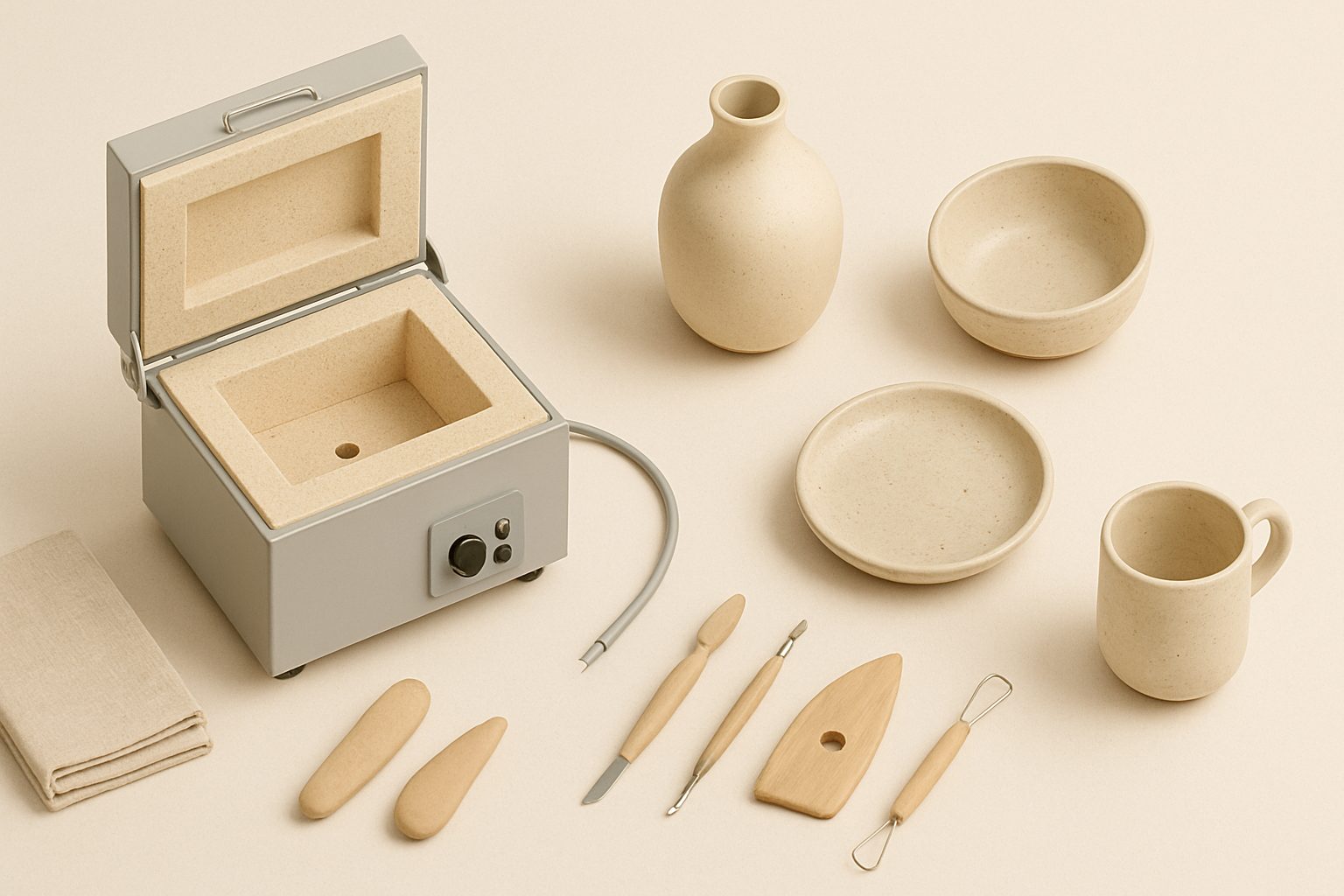
Home Kiln Buying Guide UK – Everything You Need to Know Before You Buy
Choosing a home kiln is a significant investment that shapes your ceramic practice for years. Unlike purchasing smaller equipment, a kiln decision involves electrical infrastructure, studio space, and ongoing running costs. This guide covers the essential factors to evaluate before committing.
Electric vs. Gas Kilns
Electric kilns dominate the UK home market because they're safer for residential settings, easier to install, and require no additional ventilation beyond standard studio practices. They heat reliably and give consistent results, which suits potters learning the craft.
Gas kilns (LPG or natural gas) offer faster firing and lower per-fire running costs once installed, but they demand proper flue installation, outdoor access, and regular servicing. Most UK homes and rental studios can't accommodate gas safely. Unless you have a garage with outside venting already in place, electric is the practical choice.
Wood-fired kilns and raku setups exist in the UK but suit dedicated outdoor spaces and experienced makers. They're labour-intensive and neighbour-sensitive.
Firing Temperature and Cone Range
Kilns are rated by their maximum firing temperature, expressed in cones (pyrometric units). Choose based on your clay and glaze:
- Cone 6 (1222°C): Ideal for stoneware and high-fire glazes. Most versatile for serious ceramics.
- Cone 04–6 (1045–1222°C): Covers earthenware through stoneware. Smaller kilns often max out around cone 6.
- Cone 10+ (1305°C+): Specialist high-fire work. Needs a robust, larger kiln and higher running costs.
Check your clay supplier and glaze recipes before buying. A kiln rated for cone 10 will fire cone 6 work perfectly, but you'll pay for capacity you don't use.
Chamber Size and Shelf Space
Kiln dimensions determine what you can actually make. Interior height and shelf diameter matter as much as volume.
- Small (30–50 litres): Suitable for jewellery, tiles, or test firings. Fits tabletops but limits larger pieces.
- Medium (80–150 litres): The sweet spot for most home studios. Handles dinner sets, substantial vessels, and sculpture.
- Large (200+ litres): Demands dedicated space and heavy electrical work. Rarely necessary unless you're producing for sale.
Measure your studio ceiling height and doorway width. A kiln sitting on a shelf looks compact; the same kiln standing on a trolley may hit the ceiling during loading. Confirm you can physically access the door when fully opened.
Electrical Requirements
This often surprises buyers. Most home kilns draw substantial power—typically 13 amps at 240V for small electric models, rising to 32+ amps for larger ones. Your studio circuit may not support this.
Check your consumer unit (fuse box) before purchasing. Many home studios run off standard 13-amp sockets, which will trip or overheat under kiln load. You'll likely need a dedicated circuit installed by a qualified electrician, costing £300–800 depending on distance from the consumer unit.
Budget for this. It's non-negotiable for safety and to avoid damaging your kiln's heating elements.
Ventilation and Studio Conditions
Electric kilns produce minimal fumes compared to gas or wood, but they still need adequate air circulation. Poor ventilation can trap heat and moisture, damaging kilns and affecting results.
- Open windows during and after firing if possible.
- Ensure your studio isn't sealed. Kilns perform poorly in damp, unventilated spaces.
- If you're in a shared building, check lease terms—some prohibit kiln use.
Gas and raku setups require formal flue systems and are rarely viable in standard UK home studios without major building work.
Space and Installation
You'll need clearance around the kiln for safe access and cooling. Leave at least 60 cm clearance on the loading side and 30 cm on other sides. Never place a kiln directly against combustible materials like plasterboard or wooden shelving. Concrete floors are ideal; wood requires protection.
Kiln stands or trolleys add cost (£200–600 for sturdy models) but protect your back and improve access. They're worth budgeting for, especially as you age.
Budget Expectations
UK home kiln prices vary widely:
- Entry-level electric (cone 6, small): £2,000–3,500
- Mid-range (medium, reliable brands): £4,000–7,000
- Large or high-fire specialist models: £8,000–15,000+
Don't forget electrical installation (£300–800), a stand or shelf setup (£200–600), kiln furniture (shelves, props: £300–500), and first-year running costs (£150–400 depending on frequency and kiln size).
Buying used can halve upfront costs but risks unknown wear on heating elements and thermocouples. If buying second-hand, ask for firing history and test fire before committing.
Finding UK Suppliers
Most UK ceramic suppliers stock small to medium electric kilns or can order them. Established makers often buy from specialist kiln retailers rather than general pottery shops—they offer better technical support and spare parts availability.
Research reviews from UK potters on pottery forums and social media. Ask what people are actually firing and whether their kilns match marketing claims. Temperature consistency and element lifespan matter far more than shiny exterior finish.
Key Questions Before Buying
- Can your studio's electrics handle this kiln? (Ring an electrician to confirm.)
- Does the maximum temperature suit your clay and glaze recipes?
- Can you physically access and load the chamber?
- Is ventilation adequate for your space?
- Are replacement elements and thermocouples available from UK stockists?
- What's the guarantee, and who covers repairs locally?
Rushing into a kiln purchase often leads to undersized, unsuitable, or unsafe setups. Spend time planning, talk to experienced potters in your area, and don't assume online specs translate to real-world performance in your studio. A well-chosen kiln will support your practice for fifteen years or more.
More options
- Electric Ceramic Kilns – Full Range (Amazon UK)
- Programmable Kiln Controllers (Amazon UK)
- Kiln Furniture & Shelves (Amazon UK)
- Kiln Vent & Fume Extraction Systems (Amazon UK)
- Jewellery & Small Specialty Kilns (Amazon UK)