Best Ceramic Kilns Under £500 in the UK – Affordable Picks for Hobbyists
Buying your first ceramic kiln is a significant investment, but you don't need to spend thousands to get started. Budget kilns under £500 are genuinely viable for hobbyists who want to fire clay at home, though they come with real trade-offs worth understanding before you buy.
What You Get—and What You Lose—at This Price Point
Kilns under £500 are almost always small electric models with limited firing capacity and basic temperature control. You'll typically see kiln sizes between 20 and 40 litres, which means you're firing small batches: a handful of bowls, mugs, or jewellery pieces per load. Cone temperatures usually max out at around 1260°C (Cone 6)—enough for most earthenware and stoneware, but not for high-fire porcelain or industrial glazes.
The big sacrifice is precision and durability. Budget kilns often have mechanical dial controls rather than digital displays, slower heating, and less even temperature distribution. Walls are thinner, so heat loss is greater. Kiln lifespan tends to be 5–10 years of regular use rather than 15+ for premium models. Electricity consumption is also less efficient.
But here's what matters: they actually work. Thousands of UK potters fire decent pieces in budget kilns. If you're hand-building, slab-building, or throwing small forms, these kilns will do the job.
Entry-Level Options: £150–£250
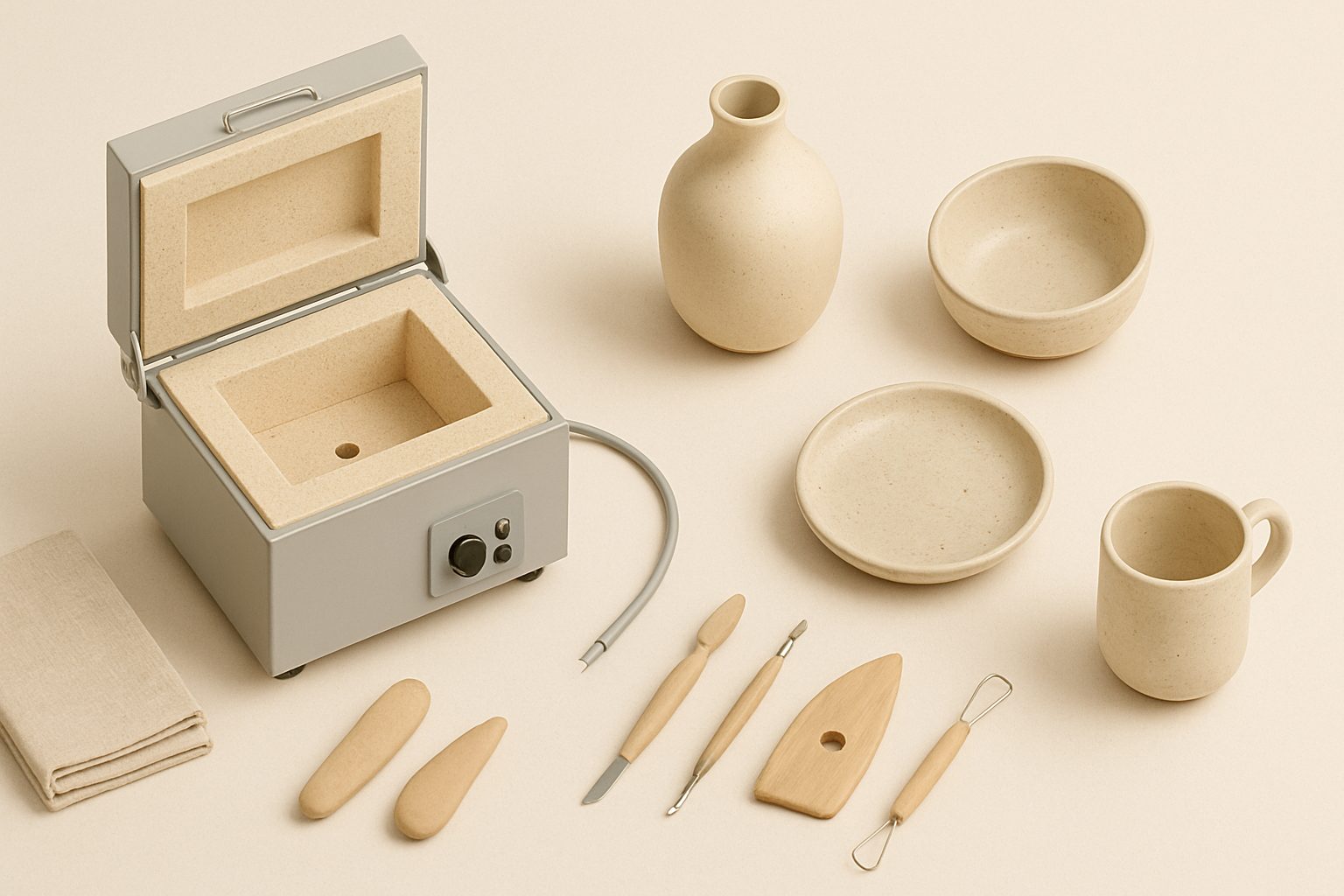
At the absolute bottom end, you'll find compact desktop kilns from retailers like Cromartie Pottery and Rio Grande. These are often compact models—around 20 litres—barely larger than a microwave. Many come ready to plug into a standard 13-amp socket, which is a real convenience if your studio doesn't have dedicated wiring.
Realistic spec: 1000–1200W, fires to Cone 6, mechanical temperature control, very basic insulation. Load times are tight; you're fitting maybe 8–10 small pieces per firing. They heat up slowly (30–40 minutes to temperature) and cool even more slowly (overnight).
These work best for jewellery, small decorative pieces, and testing glazes. They're genuinely affordable entry points, but don't expect speed or volume.
Mid-Budget Range: £250–£400
This is where you start seeing more capable machines. You'll find kilns in the 30–40-litre range from brands like Kiln Craft and other UK-based pottery suppliers. Some refurbished or second-hand models in this bracket are worth serious consideration—a well-maintained kiln from a pottery studio closure or upgrade often costs less than a new budget model and performs better.
What improves: larger firing chamber, faster ramp-up time (60–90 minutes), better insulation, and often a digital controller. Some models include shelves and stilts in the price.
At this level, you can fire a reasonable variety of pieces—a week's worth of hand-building work, or 20+ mugs in a single load if you're a thrower. Temperature control is more reliable, meaning fewer mis-fires and more consistent results.
Specific Kilns Worth Investigating
Compact electric models (£150–£300): Cromartie Pottery and many local pottery suppliers stock these. They're honest about the limitations. Check what's included—some come with just the kiln body; you may need to buy a separate controller and wiring kit, which adds £50–£100.
Refurbished mid-range kilns (£280–£400): Check Facebook Marketplace, eBay, and pottery group forums. Kilns from schools, community arts centres, or retiring potters often appear here. Ask the seller about:
- How many firing hours on the kiln?
- Is the element intact?
- Has the insulation been damaged?
- Does the controller (if digital) work properly?
A 10-year-old Kiln Craft that's been well-maintained often outperforms a new budget model.
New budget models with digital controls (£350–£450): Suppliers like Laguna Clay and some UK distributors stock basic digital kilns. The controller matters here—even a simple LED display and temperature readout beats a mechanical dial.
Before You Buy: Ask These Questions
Space and electrics: These kilns typically need a 16-amp circuit minimum. Check your studio's electrics before ordering. Also consider where the kiln sits—it needs ventilation and a non-flammable surface beneath it.
What's included?: Some retail prices are misleading. Confirm whether the price covers shelves, posts, stilts, thermocouples, and the control unit. Budget kilns often sell these separately.
Firing costs: Running a small kiln costs roughly £1–£2 per firing in electricity (roughly 5–8 hours of use per load). That's worth factoring in if you're firing weekly.
Support and repairs: Can you actually contact the seller if something fails? Budget kilns are often sold via generic online retailers with poor support. Buying from a specialist pottery supplier (even at a slightly higher price) often proves cheaper long-term because you can get repairs and advice.
Honest Reality Check
Budget kilns are noisy (loud elements, cooling fans), slow to reach temperature, and occasionally temperamental. They break down more often than premium models. If your pottery depends on speed, volume, or absolute consistency, you'll outgrow these kilns within a year or two.
But if you're testing whether pottery is actually a hobby you'll stick with, or you want to fire small batches from home, a kiln under £500 absolutely makes sense. Many experienced potters keep a budget kiln for testing glaze recipes or firing quick projects while the main kiln is in use.
Start with: a refurbished model if you can find one locally (no shipping cost, you can inspect it). If buying new, choose a supplier based in the UK with a phone number you can actually ring.
More options
- Electric Ceramic Kilns – Full Range (Amazon UK)
- Programmable Kiln Controllers (Amazon UK)
- Kiln Furniture & Shelves (Amazon UK)
- Kiln Vent & Fume Extraction Systems (Amazon UK)
- Jewellery & Small Specialty Kilns (Amazon UK)